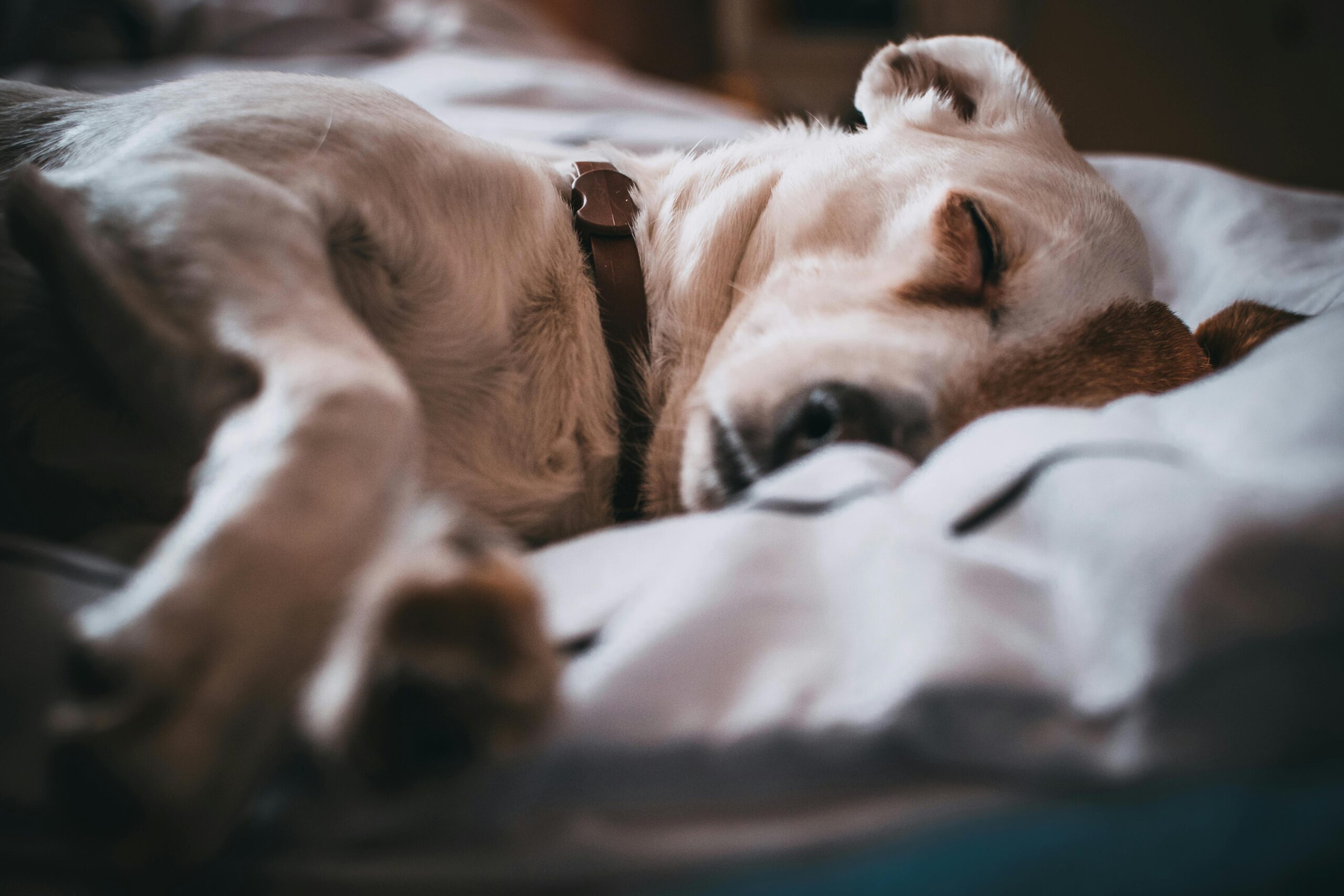
Have you ever looked at your furry loved one curled up on the couch in the living room and wondered, “What does that mean?” Believe it or not, your dog’s sleeping position is more than just a cute quirk; it is a subtle window into their comfort, health, and emotional state.
Just like us humans, dogs also go through different sleep stages, including REM (rapid eye movement), where dreaming and twitching paws occur. Research also suggests that animals, including dogs, process memories and emotions during sleep, making bedtime as vital for them as it is for us. The way your dog chooses to snooze can provide clues about their wellbeing, trust in their environment, and even physical health.
Let’s dive into some of the most common canine sleeping positions and decode what they really mean.
- The Side Sleeper: Legs stretched out, body relaxed, this is one of the most common positions. Dogs who sleep this way are usually secure, happy, and in deep sleep. It’s also when you’re most likely to catch those adorable “dream runs” as their paws twitch.
- Take-home message: This position reflects trust in their surroundings and comfort with temperature. Older dogs with stiff joints may prefer it for easier rest.
- The Lion’s Pose: Head on paws, chest upright. Think of it as the doggy version of “resting but alert.” Pups in this pose are snoozing lightly and ready to leap up if needed.
- Take-home science: It’s a transitional posture, common in dogs who want to stay aware of their environment, often linked to natural watchdog instincts.
- The Superman: Belly flat to the floor, legs stretched out like they’re flying through the air. This position is common in playful puppies or high-energy breeds.
- Take-home science: This keeps them cool and allows quick re-entry into play. This is your dog’s way of saying, I’m tired but not done yet!
- The Donut: Curled tightly with nose near tail and paws tucked in. This instinctive position protects their organs and preserves heat.
- Take-home science: This is survival behavior inherited from their wild ancestors. Dogs who are cold, nervous, or adapting to a new environment often curl up this way.
- The Belly-Up (Paws in the Air): Possibly the cutest and most vulnerable position. Belly exposed, paws in the air, sometimes resembling a “dying cockroach.”
Sleep patterns:
- Puppies: 18–20 hours/day (growth takes energy!
- Adults: 8–14 hours/day (with naps scattered throughout)
- Seniors: 18–20 hours/day (slower metabolism and lower activity)
Dreaming, twitching, barking, or even “running” in their sleep are all signs of REM sleep. Perfectly normal and healthy. Snoring, however, is most common in brachycephalic breeds like Pugs and Bulldogs due to their anatomy.
Your dog’s bedtime habits are more than just adorable photo opportunities, they’re silent signals about how safe, healthy, and comfortable they feel. While a belly-up snooze shows deep trust, a tight donut curl might indicate your pup is chilly or still settling into their environment.
Key takeaway: Pay attention to changes. If your dog suddenly alters their sleeping position, sleeps far more (or less) than usual, or struggles to get comfortable, it may be a sign to schedule a vet check.
Frequently Asked Questions
Is it normal for dogs to twitch, bark, or “run” in their sleep?
Yes! These movements are signs of REM sleep, when dogs dream and process emotions—similar to humans.
Do dogs dream about their owners?
Research suggests yes, dogs likely dream about familiar experiences, places, and people, including their owners, much like humans replay memories in sleep.
Why does my dog change sleeping spots during the night?
Dogs often move to regulate temperature, find comfort, or check in on their environment. Frequent spot-changing is usually normal unless it seems restless.
Why does my dog always circle or dig before lying down?
This is an instinct passed down from wild ancestors, who would circle or dig to flatten grass, make a nest, or check the safety of the spot.

No responses yet