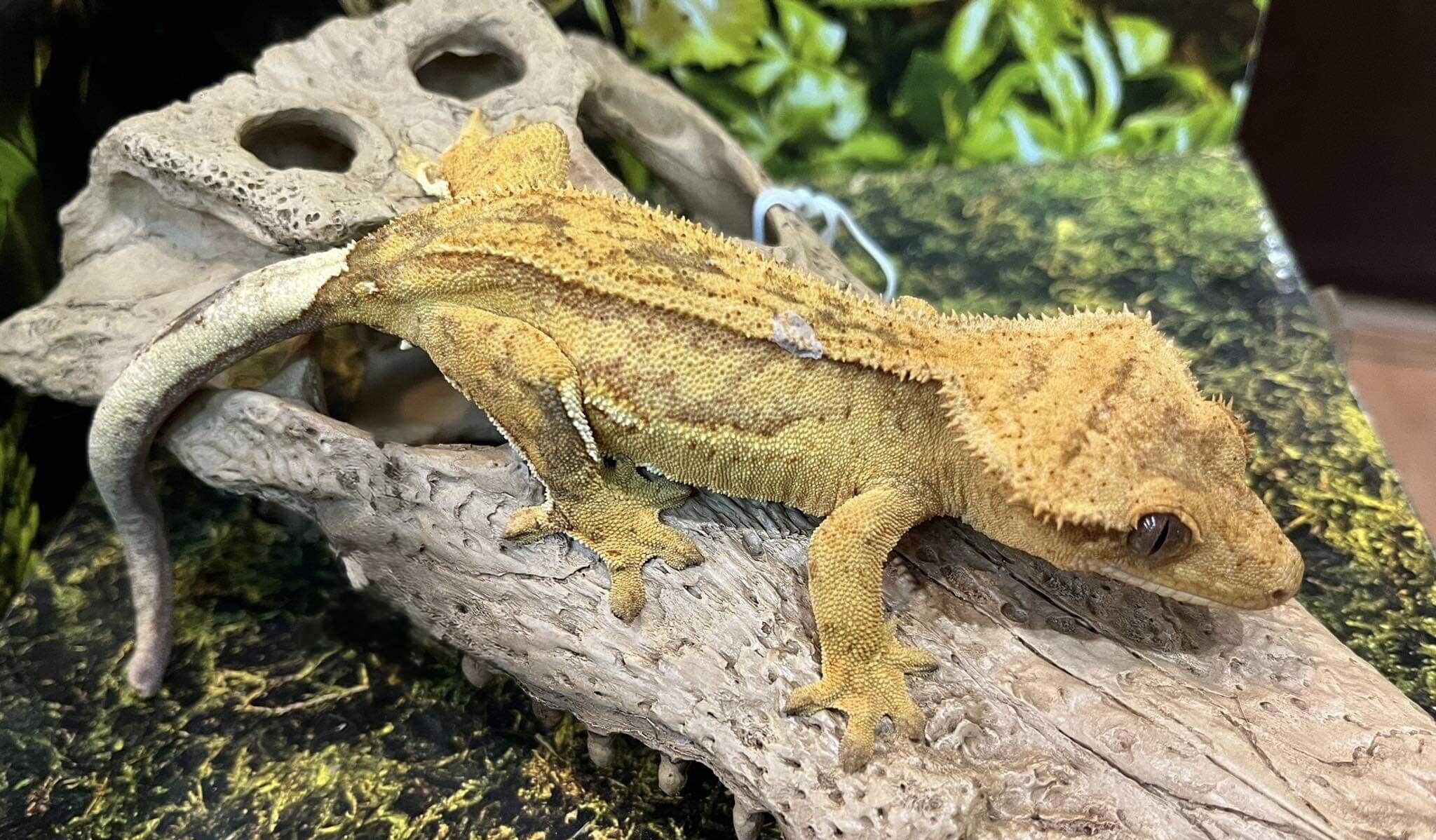
Are you looking for a low-maintenance pet, full of personality, and that looks like it walked straight out of a prehistoric movie? Meet the Crested Gecko (Correlophus ciliatus). With their big eyes, expressive eyelashes, and sticky toes built for tree-hopping, these geckos are captivating companions for both beginners and long-time reptile owners.
They thrive in home setups that mimic humid tropical forests and could live up to 15 – 20 years if taken care of properly. They are usually calm, curious animals in nature. They love to peep from plants, leap gracefully around their enclosure, and occasionally stick to the glass ceiling too.
They come in a stunning variety of morphs, showing different patterns and colors, including flame, harlequin, dalmatian, and pinstripe. Some are dark orange or creamy yellow, others, speckled or striped, giving each gecko a unique look.
As a previous crested gecko owner, observing Dipper was one of my favorite times of the day, and she never failed to make me giggle. It seemed as if she could understand what I was telling her by the way she would look at me with full focus when I spoke.
What do you need to take care of a crested gecko yourself?
- A tall terrarium is key for all of their climbing needs, with a recommended 45 × 45 × 60 cm for an adult, and larger if you have more than one housed together.
- Adding branches, vines, and foliage to create a stimulating environment to keep them entertained.
- Maintain humidity of around 50% – 70%. Make sure you mist it in the morning and evening to keep things moist and encourage healthy shedding.
- The ideal temperature ranges from 22 – 26 degrees Celsius. Basking lights are not required, but natural daylight cycles or low-intensity UVB can help keep them healthy with a correct metabolism.
Feeding Your Gecko
Crested geckos have a sweet tooth. In captivity, a commercial powdered gecko diet that is mixed with water is their main nutritional base. These diets are scientifically balanced, providing the right vitamins, minerals, and insect proteins in a mixture known as grub (or as we call it, gecko smoothie).
You can also occasionally offer small live insects, like crickets or roaches, for enrichment and extra protein.
Common Health Issues
Although they are quite hardy, just like all reptiles, they are also prone to issues, most of which stem from our lack of proper care. The improper shedding due to low humidity, especially around the toes and tail, along with dehydration and nutritional Metabolic bone disease (MBD) from calcium deficiency, are some of the most commonly occurring issues.
Fun facts!!
- Crested geckos have no eyelids; they lick their eyes to keep them clean and moist.
- Their tails could be lost, but unlike the leopard gecko, this does not grow back. It is used for climbing, but if they feel even remotely threatened, they can drop it to escape predators; in fact, most adults are tailless.
- Created geckos were believed to be extinct until they were rediscovered in 1994 in New Caledonia. Since then, they have become popular pets due to their hardy nature, beautiful colours, and easy care.
Final Thoughts
Crested geckos are proof that great pets can come in small, sticky-toed packages. With their unique looks, curious nature, and simple care needs, they’re perfect for anyone wanting a pet that’s a little exotic and a lot of fun.
Frequently Asked Questions
How often should I feed my crested gecko?
Feed every other day using a commercial powdered diet mixed with water. You can offer live insects (like small crickets or roaches) once or twice a week as a treat.
Can crested geckos be handled?
Yes! They’re usually gentle and tolerate handling well once they trust you. Keep sessions short and calm, and avoid grabbing their tail (remember, they can drop it if startled).
Can I keep two crested geckos together?
Only females can sometimes live together peacefully. Never house two males, as they’ll fight. Always make sure there’s enough space and hiding spots for each gecko.
Where do crested geckos come from?
Crested geckos are native to New Caledonia, a group of tropical islands in the South Pacific. They live in humid rainforests, spending most of their time climbing in trees and hiding among leaves.

No responses yet